Take Control of Your Money with One Complete Budget Planning System
Managing money becomes difficult when bank accounts, bills, subscriptions, savings goals, credit cards, expenses, and income are tracked in different places—or not tracked at all.
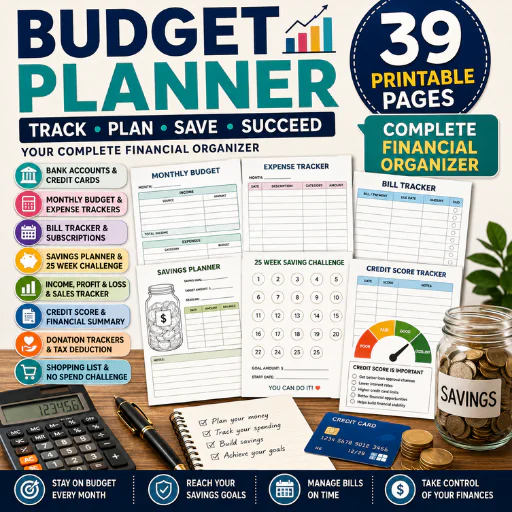
The 39-Page Budget Tracker & Financial Planner brings these essential financial records together into one practical printable system.
Designed for personal and household money management, this planner helps users organize their finances, understand spending habits, plan monthly budgets, track bills, monitor savings progress, record income, manage credit-related information, and maintain a clearer overview of their financial activity.
Instead of relying on memory to remember where money went or which payment is coming next, users can put important financial information on paper and review it regularly.
Whether someone is beginning their first budget, trying to reduce unnecessary spending, organizing family finances, building savings habits, or simply wanting better financial records, this planner provides a structured place to start.
39 Printable Financial Planning Pages
This isn't just a monthly budget worksheet.
The collection covers multiple areas of everyday financial organization, including:
Bank Accounts • Credit Cards • Monthly Budgets • Expenses • Income • Bills • Subscriptions • Savings • Shopping • Credit Score • Donations • Sales • Taxes • Financial Summaries • Annual Planning
The result is a more comprehensive financial organization resource that can be used throughout the year.
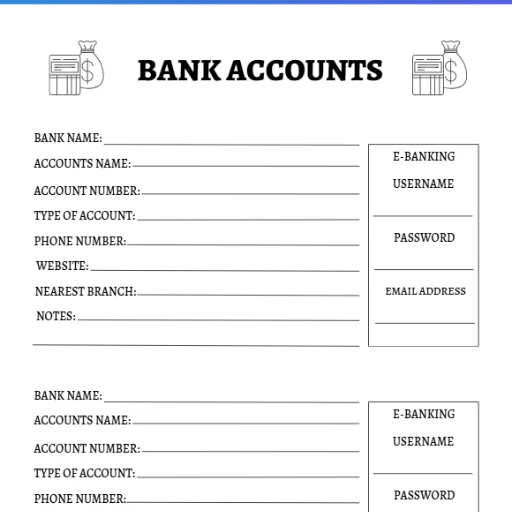
🏦 Bank Account Planner
Keep important bank account information organized in one convenient location.
The bank account section can help users maintain a clearer overview of the accounts they use and reduce confusion when managing multiple financial accounts.
💳 Credit Card Tracker
Credit cards can become difficult to manage when several payment dates, balances, or account details need attention.
The Credit Cards section provides dedicated space for organizing credit-related information and keeping important details easier to review.
Combined with the other budgeting pages, this creates a broader picture of personal finances rather than looking only at cash spending.
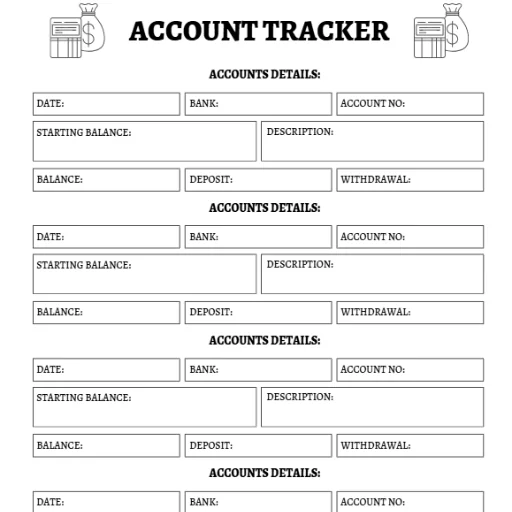
📊 Account Tracker
Keep track of different financial accounts using a dedicated account organization page.
This is particularly useful for anyone managing several accounts and wanting a simple printable reference instead of scattered notes.
📅 Monthly Budget
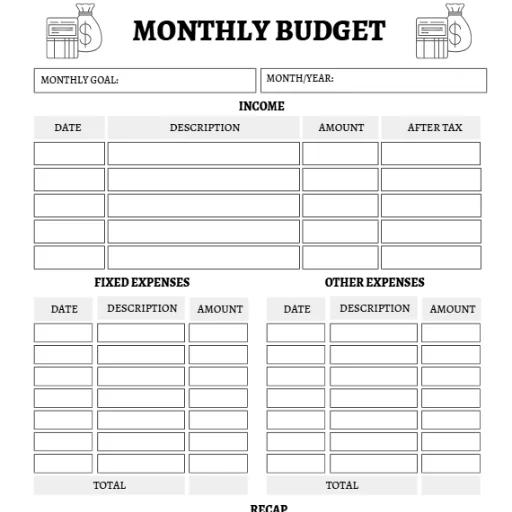
Create a financial plan for each month before spending begins.
A monthly budget helps users think intentionally about:
Income
Regular expenses
Variable spending
Bills
Savings
Financial priorities
Rather than discovering at the end of the month that too much has been spent, budgeting encourages users to decide in advance where their available money should go.
🎯 Zero-Based Budget
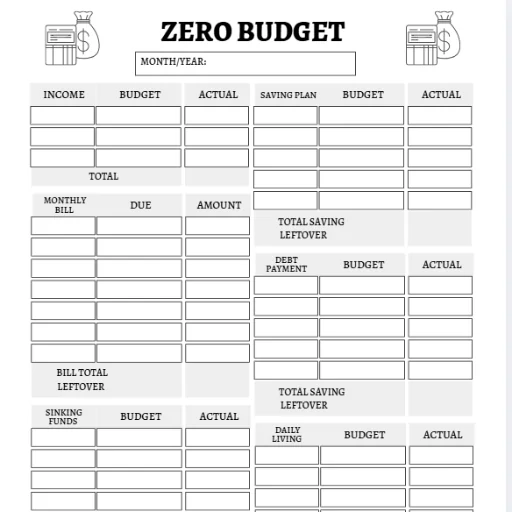
The included Zero Budget page provides another approach to monthly money planning.
With zero-based budgeting, available income is intentionally assigned across expenses, savings, debt-related payments, and other financial priorities until the planned amount remaining is zero.
That does not mean spending every rupee.
Savings and other financial goals can also receive planned allocations.
The purpose is to give available money a defined role instead of leaving large amounts unplanned.
📈 Credit Score Tracker
Monitor credit score information over time with a dedicated tracking page.
Regular records can make it easier to notice changes and maintain awareness of credit-related progress.
The planner also includes a Credit Score Importance section to support better organization and understanding of this area of personal finance.
🛍️ Spending Tracker
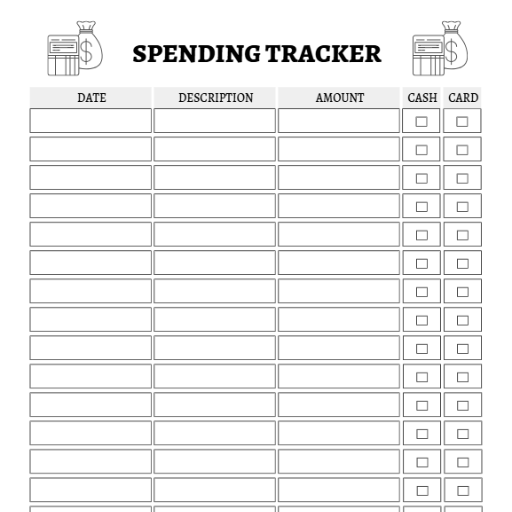
Small purchases can add up surprisingly quickly.
The Spending Tracker provides a place to record purchases and see where money is actually going.
Regular spending records can help users identify patterns such as frequent impulse purchases, unnecessary recurring spending, or categories consuming more of the budget than expected.
🚫 No-Spend Challenge
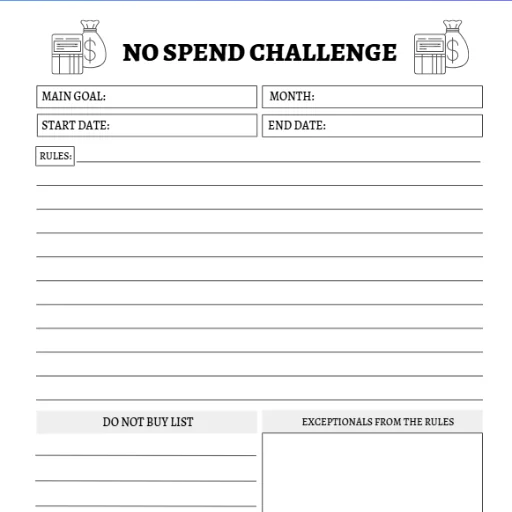
Want to challenge yourself to reduce unnecessary purchases?
The No-Spend Challenge adds a motivational element to the planner.
Users can set a challenge period and track successful no-spend days, helping them become more conscious of discretionary purchasing habits.
It can be especially useful for anyone trying to reset spending behavior or redirect more money toward savings goals.
🧾 Expense Tracker
Record everyday expenses instead of trying to remember them later.
The expense tracker helps users maintain a clearer picture of actual spending and compare it with planned budgets.
This can reveal the difference between:
What you thought you would spend
and
what you actually spent.
That difference is one of the most important pieces of information when improving a budget.
💵 Paycheck Budget
Budget around individual pay periods using the Paycheck Budget page.
This can be useful for people who prefer to allocate money whenever income arrives rather than managing the entire month as one large budget.
Users can plan how each paycheck will contribute toward upcoming bills, expenses, savings, and other financial priorities.
📆 Yearly Expense Tracker
Not every expense occurs monthly.
Annual fees, renewals, celebrations, seasonal costs, insurance-related payments, and other irregular expenses can disrupt a monthly budget if they are forgotten.
The Yearly Expense section provides a place to record and anticipate these less-frequent costs.
💰 Income Tracker
Knowing exactly how much money comes in is just as important as tracking what goes out.
Use the Income Tracker to organize different income sources and maintain a clearer record of earnings.
This can be especially useful for households with multiple income streams or people whose income varies.
🔔 Bill Tracker
Keep recurring financial obligations visible with the Bill Tracker.
Record important bills and organize payment information so upcoming expenses are easier to anticipate.
Instead of relying solely on memory, users can incorporate bill payments directly into their budgeting routine.
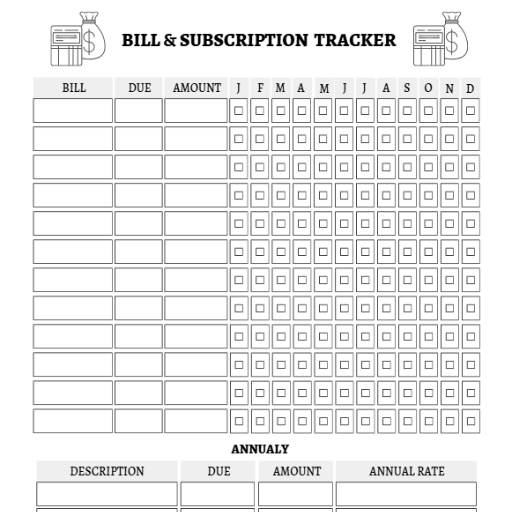
🔄 Bills & Subscription Tracker
Subscriptions can quietly become a significant expense.
Streaming services, apps, software, memberships, and other recurring payments may continue long after they stop providing meaningful value.
The Bills & Subscription Tracker gives users a central place to record recurring charges and review whether each one is still needed.
👨👩👧👦 Family Budget
Household finances usually involve more than one person's expenses.
The Family Budget page provides a structured way to organize shared household financial priorities.
It can help families see essential costs, discretionary spending, savings plans, and other commitments together rather than treating each expense separately.
🛒 Online Shopping Tracker
Online purchases can happen quickly, making them easy to lose track of.
Use the Online Shopping section to maintain a clearer record of purchases and reduce unplanned spending.
📝 Shopping List
Planning purchases before shopping can reduce impulse buying.
The included Shopping List provides a simple place to organize intended purchases before spending.
📋 Budget List
Keep financial priorities, planned expenses, or budget-related items organized in an easy-to-review list.
This flexible page can complement the more structured trackers elsewhere in the planner.
📅 Weekly Expense Tracker
Monthly totals are useful, but waiting until the end of the month to review spending can be too late.
The Weekly Expense page allows users to review spending in shorter intervals.
Weekly check-ins make it easier to spot overspending early and adjust before the month ends.
⏰ Upcoming Expenses
Unexpected expenses aren't always truly unexpected.
Many are simply known costs that weren't recorded.
The Upcoming Expense section helps users identify future payments before they arrive and incorporate them into their financial planning.
🗓️ Annual Overview
Step away from daily transactions and view finances from a broader perspective.
The Annual Overview can help users see how their financial activity develops across the year and maintain focus on longer-term priorities.
📆 Financial Calendar
A dedicated Financial Calendar makes it easier to visualize important money-related dates.
Users can record items such as bill dates, financial deadlines, savings milestones, planned expenses, and other important events.
📊 Profit & Loss
The planner also contains a Profit and Loss page.
This adds value for users who need a simple way to record income and expenses associated with side projects, freelance activity, or small-scale business activity.
It is intended as an organizational worksheet rather than a substitute for formal accounting records.
📈 Financial Tracker
Use the general Financial Tracker to monitor important financial information in one organized location.
Its broader format can complement the specialized income, expense, savings, and bill trackers.
📑 Financial Summary
Individual transactions tell only part of the story.
The Financial Summary helps bring financial information together for easier review.
Regular summaries can make it easier to evaluate progress and decide what needs to change in the next budgeting period.
🧮 Tax Deduction Tracker
Keep records of potential tax-related deductions organized throughout the year rather than trying to reconstruct everything at tax time.
The Tax Deduction page is designed for record organization only. Tax rules vary by country and individual circumstances, so users should verify eligibility with the relevant tax authority or a qualified professional.
❤️ Donation Tracker & Annual Donation Log
For users who regularly contribute to charities, organizations, community causes, or other recipients, the planner includes both:
Donation Tracker
and
Annual Donation Log
These pages provide a structured place to record giving throughout the year.
📦 Sales Tracker
Anyone earning money through products, freelance services, creative work, or a small side business can use the Sales Tracker to record sales activity.
This makes the planner useful beyond standard household budgeting.
🧾 Billing Accounts
Keep billing-related account information organized with a dedicated Billing Accounts page.
It provides another central reference point for recurring financial responsibilities.
🐷 Savings Planner
Financial planning isn't only about reducing expenses.
It's also about intentionally building toward future goals.
The Savings Planner helps users define what they're saving for and monitor progress toward that target.
Possible goals might include an emergency fund, education, travel, a major purchase, home expenses, or another personal priority.
💰 25-Week Savings Challenge
Turn saving into a measurable challenge with the included 25-Week Saving tracker.
Instead of treating saving as something to do only when money happens to be left over, users can build a consistent habit over a defined period.
Seeing progress accumulate week after week can make longer-term goals feel more achievable.
One Planner for Everyday Financial Organization
The real strength of this product is the combination of planning and tracking.
A budget alone tells you what you intend to do.
An expense tracker tells you what you actually did.
A financial system becomes much more useful when both are used together.
Users can:
Plan → Spend → Track → Review → Adjust → Save
That creates a practical financial routine rather than a collection of disconnected worksheets.
Who Is This Planner For?
This printable budget planner is suitable for individuals, couples, families, students learning personal finance, freelancers, side-hustle owners, small-scale sellers, savings-focused users, and anyone wanting to organize everyday finances on paper.
It can also work well for users who prefer handwriting their finances rather than relying entirely on budgeting apps or spreadsheets.
Why Printable Budgeting Still Works
Digital budgeting tools can be powerful, but they can also become something users set up once and rarely review.
Writing financial information manually forces users to look at the numbers.
Recording an expense makes the purchase visible.
Updating savings makes progress visible.
Writing down subscriptions makes recurring costs visible.
The value of a printable planner isn't automation—it's financial awareness and intentional review.
📁 Product Details
Product: Budget Tracker & Financial Planner
Total Pages: 39
Format: Printable PDF
Product Type: Digital Download
Purpose: Personal budgeting and financial organization
Physical Product: Not Included
You can print the pages you need and create your own financial planning binder.
Important: This planner is an organizational and educational resource. It does not provide individualized financial, investment, tax, accounting, or credit advice.
Published:
Jul 30, 2026 12:46 AM
Category:
Product Type:
plannerSize:
a4Color:
black & whiteTags: