Make Science Exciting, Visual, and Easier to Understand
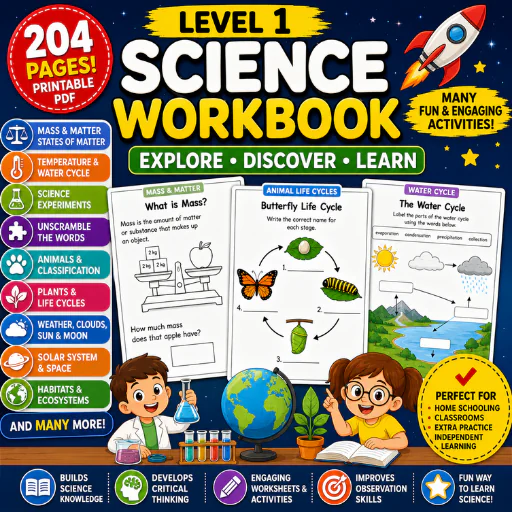
Turn everyday curiosity into meaningful learning with the Level 1 Science Workbook for Kids, a comprehensive printable educational resource designed to introduce young learners to the fascinating world of science.
Science is everywhere. It is in the water children drink, the animals they see, the weather outside their window, the plants growing around them, the Moon in the night sky, and even the objects they touch every day. This workbook brings those everyday experiences into structured learning activities that help children explore important introductory science concepts in an approachable and engaging way.
Rather than focusing on only one subject, this workbook brings together a broad collection of physical science, life science, Earth science, environmental science, and space science topics.
Children can explore concepts such as mass, matter, states of matter, temperature, the water cycle, animals, animal classification, habitats, ecosystems, food chains, life cycles, weather, clouds, plants, the Sun, Moon, solar system, space, and much more.
The workbook also incorporates different activity styles, including science experiments, word-unscrambling exercises, identification activities, topic-based worksheets, and other learning exercises. This variety helps prevent science practice from becoming repetitive.
Whether used at home, during homeschooling, alongside classroom lessons, or as additional educational practice, this Level 1 workbook provides families and educators with a substantial science-learning resource in one convenient digital product.
A Broad Introduction to Science
One of the biggest advantages of this workbook is its range.
Many children's printable products cover only one topic—for example, an animal workbook, a weather workbook, or a solar system activity pack.
This resource brings numerous introductory science subjects together.
Children can move from learning what matter is to discovering how butterflies develop, then explore desert animals, weather, plants, the Moon, and outer space.
This makes the workbook particularly useful for introducing children to different branches of science and discovering which subjects capture their curiosity.
Explore Mass, Matter & the Physical World
Children encounter matter everywhere, even if they don't yet know the scientific terminology.
The workbook introduces foundational concepts related to:
Mass • Matter • States of Matter • Temperature
These topics provide an early introduction to physical science.
Children can begin developing an understanding that the objects and substances around them have physical properties and can exist in different forms.
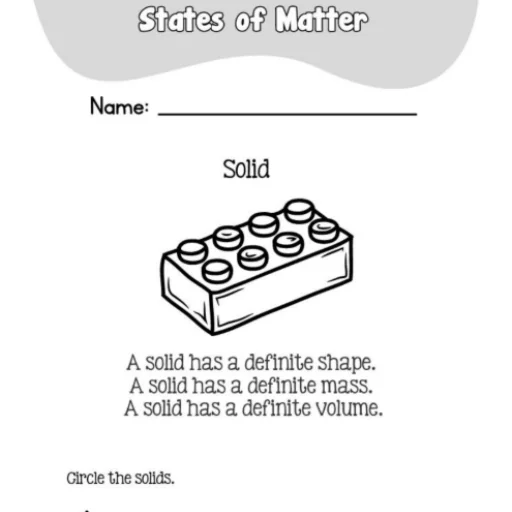
Learning about states of matter helps introduce the differences between solids, liquids, and gases in a way that can later support more advanced science learning.
Temperature-related activities further connect science with children's everyday experiences—such as understanding hot and cold conditions and observing changes in the environment.
Discover the Water Cycle
Where does rain come from?
Where does water go after it rains?
Why do clouds form?
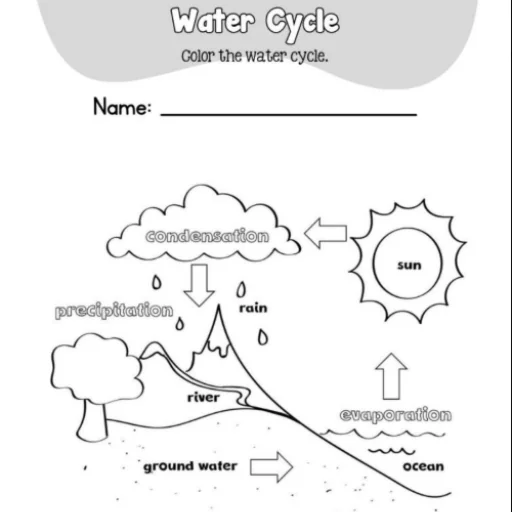
The water cycle is one of the most recognizable introductory Earth science concepts, and this workbook gives children opportunities to explore how water moves through our environment.
Learning about the water cycle can help children begin connecting several familiar natural events, including:
Water → Evaporation → Clouds → Rain → Collection
Instead of viewing rain, clouds, rivers, and sunshine as completely separate events, children can start recognizing them as parts of larger natural systems.
Hands-On Science Experiment Activities
Science becomes much more meaningful when children can move beyond simply reading information.
This workbook includes science experiment activities that add a practical element to the learning experience.
Simple experiments can encourage children to:
observe what happens, make predictions, notice changes, compare results, ask questions, and think about possible explanations.
This approach introduces an important idea very early:
Science isn't only about remembering facts. It's also about observing, questioning, testing, and discovering.
For parents and educators, these activities can provide opportunities to discuss the science behind everyday experiences.
Learn Science Vocabulary Through Word Activities
Building vocabulary is an important part of learning science.
The workbook includes activities such as unscramble the words, giving children another way to interact with science terminology.
Rather than only reading new words, children have to recognize letter patterns and reconstruct the correct term.
These activities can support science vocabulary while also reinforcing spelling, observation, and problem-solving skills.
Discover the Amazing Animal Kingdom
Animals form a major part of the workbook.
Instead of simply showing children different animals, the resource introduces important animal groups and classification concepts.
Topics include:
Mammals
Amphibians
Reptiles
Birds
Fish
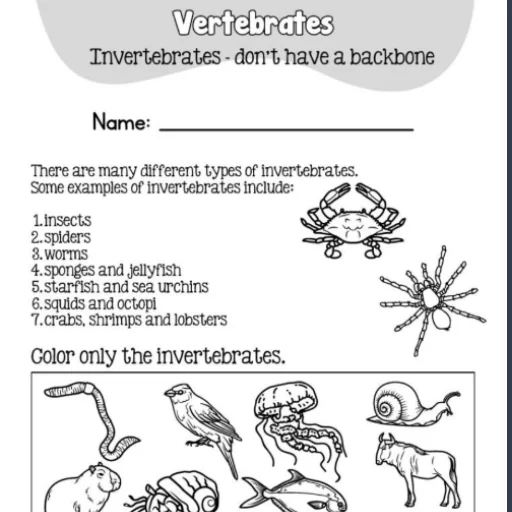
Vertebrates
Marsupials
Mollusks
Crustaceans
Children can begin understanding that animals can be grouped according to shared characteristics.
For example, a fish and a bird are both animals, but their bodies, environments, and ways of living can be very different.
Introducing classification at an early stage helps children move beyond simply naming animals toward understanding relationships within the natural world.
Learn About Mammals
Children are usually familiar with many mammals before they formally learn what makes an animal a mammal.
The workbook provides opportunities to explore mammals as an animal group and recognize familiar examples.
This can help children develop their ability to observe characteristics and understand basic classification.
Explore Amphibians, Reptiles, Birds & Fish
The animal-learning section expands beyond mammals to introduce other major groups.
Children can explore the characteristics and environments of:
Amphibians, reptiles, birds, and fish.
This broader exposure encourages comparison.
How is a bird different from a fish?
Where might an amphibian live?
What characteristics are associated with reptiles?
Questions like these can turn simple animal recognition into early scientific reasoning.
Discover Vertebrates & Other Animal Groups
The workbook also introduces children to terms such as vertebrates, helping build a stronger foundation for later biology learning.
Other fascinating animal groups covered include marsupials, mollusks, and crustaceans.
These topics expand children's understanding beyond the most familiar household and farm animals and expose them to the enormous diversity of life on Earth.
Learn About Hibernation
Why do some animals become inactive during colder periods?
The workbook introduces hibernation, connecting animal behavior with seasonal and environmental conditions.
This topic can encourage children to think about how animals survive and adapt to changes in their surroundings.
Understand Food Chains
Animals don't exist independently of everything around them.
Living things are connected.
The workbook introduces food chains, helping children begin understanding how energy and food relationships connect plants and animals within ecosystems.
Food-chain activities can encourage children to think about questions such as:
What does an animal eat?
Where does its food come from?
How are plants and animals connected?
What might happen if one part of a food chain changes?
These are important foundations for understanding ecosystems.
Travel Through Amazing Animal Habitats
One of the most engaging sections of the workbook is its exploration of habitats.
Children can discover animals and living environments across multiple ecosystems, including:
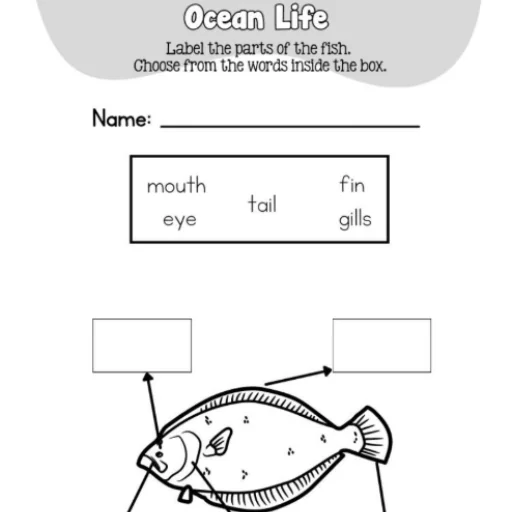
Ocean Life
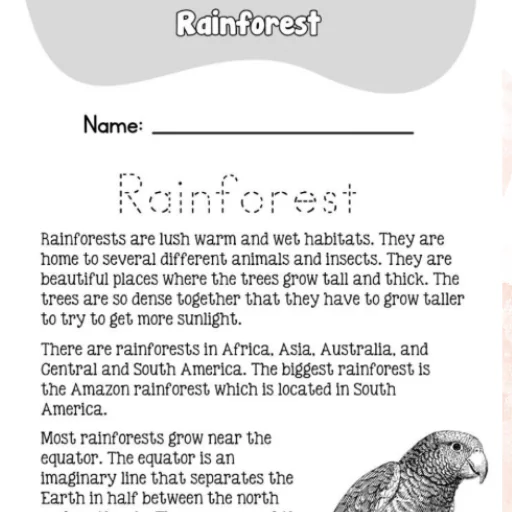
Rainforest Life
Forest Life
Desert Life
Freshwater Life
Swamp Life
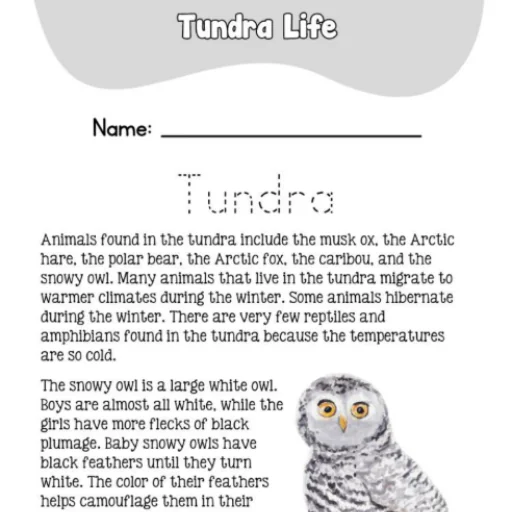
Tundra Life
Grassland Life
Each environment presents different living conditions.
A desert animal faces very different challenges from an animal living in a rainforest or freshwater habitat.
By comparing habitats, children can begin understanding that animals live in environments suited to their needs and characteristics.
Dive Into Ocean Life
The ocean is home to an extraordinary variety of living things.
Ocean-themed activities give children opportunities to explore marine life while learning that oceans form complex habitats containing many different organisms.
This topic can be particularly engaging for children fascinated by fish and other sea creatures.
Journey Into Rainforest & Forest Life
Rainforests and forests provide another opportunity to investigate biodiversity.
Children can discover how different animals and plants share these environments and begin recognizing how habitats provide living things with food, shelter, water, and space.
Discover Desert, Tundra & Grassland Life
Not every habitat is lush and green.
By exploring deserts, tundras, and grasslands, children are exposed to dramatically different environments.
This helps build an understanding that living things can survive under many different environmental conditions.
Explore Freshwater & Swamp Life
Freshwater environments and swamps introduce another ecosystem category.
Children can explore organisms that depend on these watery habitats while comparing them with ocean ecosystems.
This reinforces the idea that not all aquatic environments are the same.
Explore Fascinating Animal Life Cycles
Animals change as they grow.
The workbook introduces animal life cycles, helping children understand that living things develop through recognizable stages.
Specific topics include:
Turtle Life Cycle
Butterfly Life Cycle
Fish Life Cycle
Other Animal Life Cycles
Life-cycle learning helps children develop an understanding of growth, development, reproduction, and change in living organisms.
Discover the Butterfly Life Cycle
The butterfly is one of the clearest examples for teaching biological transformation.
Children can explore the progression from early developmental stages through transformation into an adult butterfly.
This topic can help children understand that an animal may look dramatically different during different stages of its life.
Explore Turtle & Fish Life Cycles
The workbook doesn't limit life-cycle learning to butterflies.
By introducing turtle and fish life cycles, children can compare how different animals grow and develop.
Comparison is particularly valuable because it encourages children to look for both similarities and differences.
Learn About Weather
Weather is science children experience every single day.
The workbook introduces weather-related concepts that help learners observe and understand changes in their surroundings.
Children can explore topics involving:
Weather • Clouds • Sun • Temperature • Water
Because these subjects are visible in everyday life, parents and educators can easily extend workbook activities into real-world observation.
Children might observe the sky, identify cloud conditions, discuss temperature, or compare weather from one day to another.
Explore Clouds, the Sun & Moon
Children naturally notice the Sun, Moon, and clouds long before formal science education begins.
The workbook turns this curiosity into structured learning.
The Sun provides an entry point into discussions about daylight, warmth, weather, and space.
The Moon introduces children to an object they can observe regularly in the night sky.
Cloud-related learning connects naturally with weather and the water cycle.
Together, these topics help bridge Earth science and introductory astronomy.
Discover the World of Plants
Plants are another major part of children's everyday environment.
Plant-related science activities can help learners understand that plants are living organisms and an essential part of natural ecosystems.
Plant learning also connects naturally with other workbook subjects such as habitats, food chains, weather, water, and life cycles.
This interconnected approach is important because science topics do not exist independently in the real world.
Blast Off Into the Solar System
Science learning extends beyond Earth with introductory activities about the solar system and space.
Space is one of the most effective subjects for stimulating curiosity in young learners.
Children can begin exploring ideas involving:
The Sun
The Moon
Solar System
Space
Our place beyond Earth
These activities provide an approachable starting point for astronomy without turning the workbook into an advanced science textbook.
Multiple Learning Styles in One Resource
This workbook isn't built around one repeated worksheet format.
Its combination of science topics and activities provides different ways for children to engage with information.
Depending on the activity, learners may be asked to:
Observe
Identify
Match
Classify
Unscramble
Read
Write
Compare
Explore
Experiment
Sequence
Think
That variety matters.
A workbook containing hundreds of nearly identical exercises can become monotonous very quickly. A broad science resource works better when children encounter different types of challenges as they move between subjects.
Perfect for Home, Homeschool & Classroom Learning
The Level 1 Science Workbook can fit into several educational settings.
Parents can use selected pages for additional learning at home.
Homeschool families can incorporate relevant worksheets into science units.
Teachers can select activities that correspond with classroom topics.
Tutors can use individual pages to reinforce specific concepts.
It can also be useful for holiday learning, science practice, educational activity time, and supplementary learning.
Skills Supported Through the Activities
Beyond science knowledge, the activities can provide practice with several broader learning skills, including:
Observation
Classification
Vocabulary
Reading comprehension
Logical thinking
Sequencing
Problem solving
Comparing
Scientific curiosity
Fine motor practice
Independent learning
Critical thinking
The exact skill involved varies according to the activity.
Why This Workbook Offers Strong Value
The main commercial advantage of this product is not simply the number of science topics.
It is the ability to provide a broad introductory science collection in one downloadable resource.
Instead of purchasing separate products for:
animals, habitats, matter, weather, life cycles, plants, water cycle, and space,
parents and educators can access these subjects within one Level 1 science collection.
That makes the product easier to position as a complete introductory science learning resource, rather than just another worksheet pack.
📁 Product Details
Product: Level 1 Science Workbook for Kids
Format: Printable PDF
Type: Digital Educational Resource
Subjects: Physical Science, Life Science, Earth Science & Space
Learning Style: Worksheets, activities, vocabulary practice and science exploration
Delivery: Digital Download
Important: This is a digital product. No physical workbook, stationery, experiment equipment, or other physical materials will be shipped.
Print quality and final sizing can depend on the printer, paper, and print settings used.
👩🏫 Who Should Use This Workbook?
This science resource can be useful for:
Parents looking for educational screen-free activities.
Homeschool families building introductory science lessons.
Teachers seeking supplementary science worksheets.
Tutors reinforcing foundational science concepts.
Learning centers needing printable educational activities.
Young learners beginning their exploration of science.
Because educational levels and curricula differ between countries and school systems, the product should be positioned primarily as Level 1 / introductory science practice rather than promising an exact universal grade level.
🌟 Give Young Learners More Reasons to Ask “Why?”
Science education should do more than provide facts to memorize.
It should encourage children to observe the world and ask questions.
Why does water change?
Why do animals live in different habitats?
Why does a butterfly change as it grows?
Why are some animals mammals while others are reptiles?
How does rain form?
What is beyond Earth?
The Level 1 Science Workbook for Kids brings these questions together through a broad collection of printable science learning activities.
From matter and temperature to mammals and mollusks, from food chains and habitats to weather and the water cycle, and from plants on Earth to the solar system beyond it, children can explore an impressive range of introductory science concepts in one resource.
For parents, teachers, and homeschool educators seeking a substantial printable science collection, this workbook offers a convenient way to bring discovery, observation, vocabulary, experiments, and scientific thinking into everyday learning.
Our Other Kids Activity
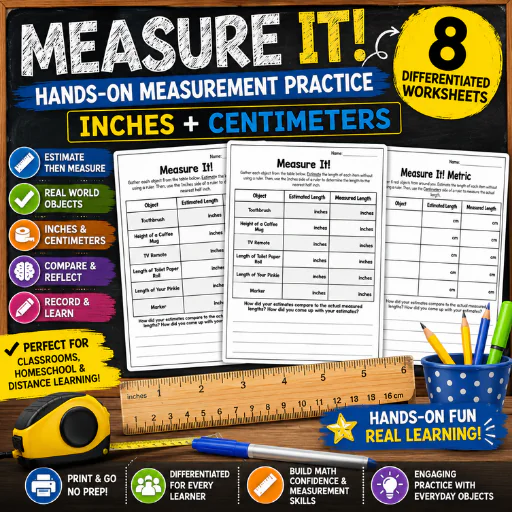
Measure It! – 8 Printable Measurement Worksheets for Kids | Inches & Centimeters
Kawaii Coloring Book for Kids – 130 Printable PDF Pages | Cute Animals, Food, Characters & Fun Color
Published:
Jul 30, 2026 12:05 AM
Category:
Product Type:
KidsSize:
a4Color:
black & whiteTags: